Persian Empire: Act One (Wars)
- Abe B
- Oct 17, 2022
- 3 min read

Persia was one of the most beautiful civilizations of the traditional world, and it still fascinates us today. Supported by Cyrus the Fair in 559 BC and ending with the conquest by Alexander the Great in 331 BC, Persia stretched from the Asiatic lands to Egypt and beyond.
It was a vast empire with many alternative cultural influences that have produced a number of its most remarkable achievements today: Architecture, poetry, art - and those attractive rugs you usually see in fancy hotels. Here are ten facts about Persia that may make you rethink your knowledge of one of history's greatest empires!


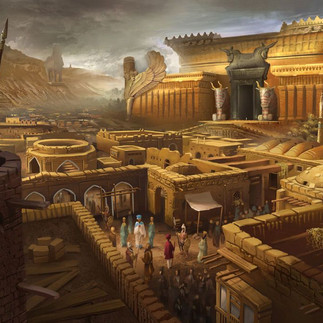
Cyrus the Great Dynasty
Persia was founded by Cyrus the Fair around 550 BC. The empire encompassed what's now Iran, Iraq, and Turkey and extended eastward into Central Asia and westward to the Mediterranean coast. Cyrus took over the Median Empire (the 1st Persian Empire) and expanded it to include Babylonia, Egypt, and thus the Indus Valley. Cyrus was tolerant of his subjects: he allowed exiles to return home; he allowed spiritual freedom; he didn't force people to accept his faith; he respected other religions such as Judaism; he didn't interfere with their customs, and so forth.

The Primary Persian War (499-449 B.C.)
In 499 B.C. Persia was at the height of its power. The Assyrians had fallen, and therefore the Persians were currently guilty of maintaining an empire that stretched from the Asiatic lands to Egypt and beyond. The Greeks were divided into 2 opposing factions: Athens and Sparta. Each city-state had completely different ideas of how it should be governed, but all had a common goal: liberation from Persian rule.
The Ionian revolt was instigated by Aristagoras of Miletus, who wanted to fight Persian rule - but instead of supporting him with its own troops, Athens just sent the money! So instead of winning battles against Persia as he'd set out to do (and expected to do), Aristagoras decided it would be best if he captured another Greek city instead so he could administer some territory outside his own borders... Unfortunately for him, however, this plan backfired big time! Quite simply, it also cost him money, because after he lost everything else, there wasn't much left except his pride, which can regularly cost us more than what we'd otherwise lose."

The Secondary Persian War (480-479 B.C.)
Cyrus the nice, who was the founding father of the Persian Empire, died in battle before he may pass down his inheritance to his son. Alexander the nice defeated the male monarch and conquered most of the peninsula (modern Turkey). Alexander’s campaign in Persia was speculated to be a brief affair. He had no intention of staying long, however, he underestimated the rebellion that may follow his departure and his own immediate successors.
Alexander defeated Darius III at the Battle of Gaugamela in 331 B.C. which gave him management over all of what's currently an Asian country Associate in Nursingd Iran. Over consecutive years, Alexander went on to capture the urban center and Sousse before moving on to Persepolis. Upon getting into what was left of 1 of Persia’s most vital cities, he burned down its royal palace – an act that aghast even his own people that were accustomed to such acts being committed by their defeated enemies (and abundant less typically by friends).
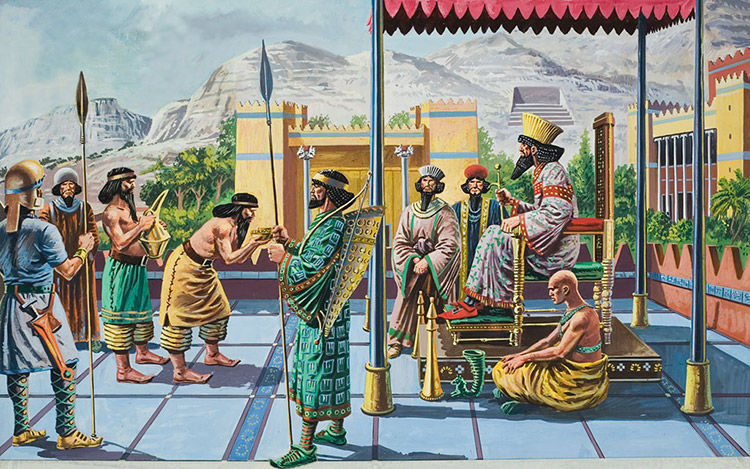
With Cyrus the Great. He was born around 600 BC in a very region referred to as Anshan (now a part of modern Iran) and have become king at age twenty once killing his brother for management over their father's kingdom. From there he went on to beat several territories across the peninsula (modern-day Turkey), eventually leading a military of tens of thousands into battle against urban centers throughout Greece's Golden Age—where he won!
Once capture quite half of Asia Minor during his lifetime, Cyrus established himself united of history's greatest military leaders by making an Associate in the Nursing empire that stretched from Greece in Europe all the method down into India--and eventually even any east than that!


Comments